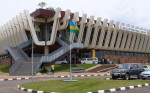
Kigali Innovation City: 50,000 Jobs and What It Means for Property


Kigali Innovation City 50,000 Jobs, $300 Million, and What It Means for Property Near Rwanda's Tech Hub
Rwanda is building a city inside a city. Kigali Innovation City known as KIC is a 61-hectare master-planned smart city under construction in Kigali’s Special Economic Zone. The official groundbreaking was held on September 10, 2024, with the Government of Rwanda, Africa50, and the Arab Bank for Economic Development in Africa (BADEA) all present. The project is expected to create over 50,000 jobs, generate $150 million in annual ICT exports, and attract over $300 million in foreign direct investment.
For property buyers and investors in Kigali, Kigali Innovation City is one of the most significant demand anchors arriving in the market. 50,000 jobs means 50,000 workers needing housing, transport, food, retail, and services within reasonable proximity. That demand is not speculative it is structural and it is building now. This article reports the facts of the KIC development, explains what it means for property in the surrounding zones, and gives buyers an honest assessment of the opportunity and the risks. For an independent valuation of any specific property near the KIC corridor, request a professional valuation from Kwanda Real Estate.
Sources: Rwanda Development Board (RDB) official communications, Africa50 project documentation, Ministry of ICT and Innovation Rwanda (MINICT), World Construction Network (December 2025), Emerging Real Estate (June 2024). All market analysis is indicative verify with a licensed agent before any decision.
1. What is Kigali Innovation City? The Confirmed Facts
Kigali Innovation City (KIC) is a mixed-use, master-planned innovation city being developed on 61 hectares of government-owned land within Kigali’s Special Economic Zone. The project is designed to position Rwanda as a global centre for technology, entrepreneurship, education, and business specifically to attract companies and professionals from across Africa and beyond to a dedicated, purpose-built innovation hub in the heart of Kigali.
The urban masterplan was unveiled in December 2021 by Africa50, the Rwanda Development Board, and the Ministry of ICT and Innovation of Rwanda. The implementation agreement granting Africa50 exclusive rights to develop, operate, and commercialise KIC was signed in May 2024. The official groundbreaking took place on September 10, 2024. Construction began with horizontal infrastructure roads, drainage systems, street lighting, and walkways as the foundation for the built environment that will follow.
KIC already houses two world-class universities: Carnegie Mellon University Africa and African Leadership University. A third the University of Rwanda Centre of Biomedical Engineering and E-Health is under construction. These institutions are not planned future additions they are already operational, already generating students and staff, and already creating demand for housing, retail, and services in the surrounding area. The Rwanda Development Board has designated KIC as a flagship initiative of the Government of Rwanda under the National Strategy for Transformation (NST1) and Vision 2050.
2. Who is Building it and How is it Financed?
The Kigali Innovation City project is a public-private partnership between the Government of Rwanda and Africa50 a pan-African infrastructure investment platform. Africa50 is co-sponsoring the project with the Rwanda Development Board on a 50/50 basis and will invest $400 million, focusing primarily on the real estate segment. The total project cost is approximately $300 million for the first phase of construction, with the broader development valued in the billions.
The Arab Bank for Economic Development in Africa (BADEA) signed a financing agreement worth $20 million with Rwanda for basic infrastructure development at the site. Additional support comes from the International Finance Corporation (IFC), the African Development Bank (AfDB), the Rwanda Innovation Fund a $100 million venture capital fund managed by Angaza Capital and Norrsken East Africa, part of the Norrsken Foundation, which raises venture capital for startups within KIC. This is one of the most well-financed urban development projects in Rwanda’s modern history.
The Government of Rwanda provided the underlying 61-hectare land in Kigali’s Special Economic Zone and funded essential shared infrastructure including roads, electricity, water systems, and drainage. By being within the SEZ, KIC’s tenants gain access to high-quality existing infrastructure and tax incentives including reduced corporate taxation and exemptions from import duties which makes it significantly more attractive to international companies than a standard Kigali commercial address. This connects directly to the broader Rwanda $2.62 billion investment surge of 2025 that has been reshaping Kigali’s property market.
3. What Will KIC Contain? The Full Breakdown
The KIC master plan is phased and will be developed over multiple years. Based on confirmed project documentation, the completed city will include:
• Universities and education: Carnegie Mellon University Africa (operational), African Leadership University (operational), University of Rwanda Centre of Biomedical Engineering and E-Health (under construction). KIC is projected to produce more than 2,600 graduates per year.
• Technology companies and offices: Purpose-built office buildings for technology companies, regional headquarters, and innovation businesses. Grade-A office space with smart building infrastructure.
• Startup incubators and accelerators: Dedicated spaces for early-stage companies supported by the Rwanda Innovation Fund and Norrsken East Africa.
• Residential facilities: Apartments and student housing for employees and students working and studying within KIC. The development includes 15 residential plots and 4 commercial plots each measuring 4,500 sqm and above, available to investors, institutions, and developers.
• Retail and hospitality: Supportive retail, business hotels, restaurants, and lifestyle amenities designed to serve the KIC community and visitors.
• Green infrastructure: The KIC smart city is being built with resource-efficient green infrastructure, aligned with Rwanda’s climate commitments under Vision 2050.
• Digital Innovation Precinct: A dedicated zone for technology companies with specialised digital infrastructure.
4. Why 50,000 Jobs is a Property Market Signal
The headline number for Kigali Innovation City is 50,000 jobs to be created over the life of the project. That number deserves serious analysis from a property market perspective not because every job creates a property buyer, but because of what 50,000 employed professionals in one location does to the surrounding demand for housing, retail, and services.
Kigali currently has approximately 1.4 million residents. Adding 50,000 jobs in a single location over a decade is a material addition to the city’s employment base. The professionals attracted to KIC technology workers, researchers, university staff and students, business executives, and support staff are predominantly from the income bracket that rents or buys quality residential property. They are not informal economy workers. They are the segment that drives demand for the mid-market and upper-mid residential zones surrounding an employment hub.
According to the National Institute of Statistics of Rwanda, Kigali’s urban population is growing at over 4% per year. KIC creates an additional demand driver on top of that organic growth. Zones within reasonable commuting distance of the KIC site that currently have available residential land at mid-market prices will see that demand reflected in prices as the KIC workforce grows. This is the same structural dynamic that the upcoming Kigali Medical City is creating for the Masaka corridor in Kicukiro. The mechanism is identical: an employment anchor creates residential demand for the surrounding zones.
5. Which Zones Near KIC Benefit Most?
Kigali Special Economic Zone corridor Gasabo District: KIC sits within the Kigali SEZ in the northern Gasabo corridor. This is the same corridor where Kinyinya, Gisozi, and Bumbogo are already seeing strong residential investment interest driven by RSSB’s Heza Estate and the broader Gasabo growth story. The KIC workforce adds a new, specific layer of demand for quality residential property in the northern Gasabo zones. See our full analysis of Heza Estate Kinyinya and what it means for the northern Gasabo corridor.
Student and staff housing demand around CMU Africa and ALU: Carnegie Mellon University Africa and African Leadership University are already operational within the KIC site. Both institutions attract students and staff from across Africa and beyond. Quality furnished apartments and short-term rental properties within 15–30 minutes of the site have documented demand from this international academic community. For diaspora buyers interested in the short-term rental market, this is a well-established demand source that will grow as KIC expands. See our guide on furnished apartments Kigali and Airbnb profitability 2026.
Commercial property in the SEZ corridor: The support economy around KIC restaurants, cafes, co-working spaces, retail, and service businesses creates demand for commercial property in accessible locations near the site. Commercial plots and ground-floor retail space within the SEZ corridor are likely to benefit from KIC’s growth over a 3–5 year horizon. Browse commercial properties for sale across Kigali for current options in the relevant corridors.
6. What Buyers Should Know Before Acting
KIC is a long-term story, not a short-term trade. The project broke ground in September 2024 and will develop in phases over many years. Buyers who need a property to appreciate within 12–24 months should not base their decision primarily on the KIC story. Buyers with a 5–10 year horizon are the right market for this demand signal.
The residential plots within KIC are large and institutional. The 15 residential plots within the KIC site itself measure 4,500 sqm and above these are developer-scale opportunities, not individual buyer plots. Individual buyers should look at the surrounding residential zones rather than the KIC site itself.
Verify zoning before any purchase near the SEZ. The Kigali SEZ has specific zoning that determines what can be built where. A residential plot adjacent to the SEZ boundary is not automatically zoned for the use a buyer intends. Verify the UPI on the Rwanda Land Management and Use Authority portal before any financial commitment.
Get an independent valuation. Some sellers near the KIC site are already pricing at levels that reflect anticipated future demand rather than current fundamentals. An independent professional property valuation from Kwanda Real Estate is the most reliable protection against overpaying in an infrastructure excitement cycle.
KEY TAKEAWAYS
• Kigali Innovation City is a 61-hectare master-planned smart city under construction in Kigali’s Special Economic Zone. Official groundbreaking: September 10, 2024.
• The project is financed by Africa50 ($400M real estate investment), the Government of Rwanda (land and shared infrastructure), BADEA ($20M), IFC, AfDB, and Rwanda Innovation Fund ($100M VC fund).
• KIC is projected to create 50,000 jobs, generate $150M in annual ICT exports, and attract $300M in foreign direct investment over the life of the project.
• Carnegie Mellon University Africa and African Leadership University are already operational within the KIC site, creating current student and staff housing demand.
• The surrounding northern Gasabo corridor Kinyinya, Gisozi, Bumbogo is most directly positioned to benefit from KIC’s workforce housing demand.
• KIC is a 5–10 year property story, not a short-term trade. Individual buyers should target surrounding residential zones, not the large developer-scale plots within the KIC site itself.
• All figures are based on confirmed project documentation. Verify zoning and title status before any property decision near the KIC corridor.
Conclusion
Kigali Innovation City is the clearest example of Rwanda’s ambition to become the Singapore of Africa made visible in concrete and steel. 61 hectares. Two world-class universities already operating. A $400 million real estate investment from Africa50. 50,000 jobs projected. This is not a planning document it is an active construction site with institutional capital behind it.
For property buyers in Kigali, the Kigali Innovation City story is a long-term structural demand signal for the northern Gasabo corridor. The buyers who understand it and position in the right zones at the right prices will look back in 2030 the way Kibagabaga buyers looked back in 2025 grateful they moved before the market fully priced in what was coming.
Browse current properties for sale across Kigali, request a professional property valuation, or contact Kwanda Real Estate for independent analysis of the Kigali Innovation City corridor.
Frequently Asked Questions
Q1: What is Kigali Innovation City?
Kigali Innovation City (KIC) is a 61-hectare master-planned mixed-use smart city under construction in Kigali's Special Economic Zone, Rwanda. It is a joint venture between the Government of Rwanda and Africa50. Construction began September 2024. It is designed to house universities, technology companies, startup incubators, offices, retail, hospitality, and residential facilities. The project is projected to create 50,000 jobs, generate $150 million in annual ICT exports, and attract $300 million in foreign direct investment.
Q2: Where is Kigali Innovation City located?
KIC is located within Kigali’s Special Economic Zone (SEZ) in the northern part of Kigali. The SEZ already has high-quality shared infrastructure including roads, electricity, and water systems provided by the Government of Rwanda. Carnegie Mellon University Africa and African Leadership University are both operational within the site.
Q3: How does KIC affect property values in Kigali?
KIC creates structural residential demand through two mechanisms: direct workforce housing (50,000 employees needing accommodation within commuting distance) and student and academic staff housing (CMU Africa and ALU already produce demand). The zones most directly affected are the northern Gasabo residential corridors surrounding the SEZ, including Kinyinya, Gisozi, and Bumbogo. Short-term rental demand from international academics and tech workers is an additional demand layer.
Q4: Can I buy a residential plot inside KIC?
The KIC development includes 15 residential plots and 4 commercial plots measuring 4,500 sqm and above these are developer-scale opportunities designed for institutional investors, universities, and large developers. Individual buyers cannot purchase standard-sized residential plots within the KIC site. Individual buyers should look at residential zones in the surrounding Gasabo corridor where conventional plot and house purchases are available.
Q5: Which universities are at Kigali Innovation City?
Two universities are already operational at KIC: Carnegie Mellon University Africa and African Leadership University. A third the University of Rwanda Centre of Biomedical Engineering and E-Health is under construction. KIC is projected to produce more than 2,600 graduates per year when fully operational.
ABOUT KWANDA REAL ESTATE
Rwanda's leading licensed property agency. KG 5 Ave, Ikirezi Building, Kacyiru, Kigali. 1% buyer · 5% seller · Zero upfront fees. kwandarealestate.com | +250 788 370 360 | [email protected]
⚠️ Educational Note: Purely educational not financial or legal advice. All figures are indicative 2026 estimates. Actual values vary by location, condition, and market conditions. Always consult qualified professionals before any property decision.