Co-Working Spaces in Kigali: Revolutionizing Commercial Real Estate


The Rise of Co-Working Spaces in Kigali
Over the past decade, Kigali has witnessed a significant transformation in its work culture, marked by the emergence and growth of co-working spaces. These spaces have become integral to the city's entrepreneurial ecosystem, offering flexible and collaborative environments that cater to startups, freelancers, and small businesses.
Growth and Popularity
The proliferation of co-working spaces in Kigali reflects the city's dynamic and innovative spirit. Notable hubs include
** Norrsken House Kigali: Opened in December 2021, this expansive 12,000-square-meter facility supports over 1,300 members, providing private offices, meeting rooms, and event spaces tailored for startups and ventures focused on innovation and social impact across Africa.
** Westerwelle Startup Haus Kigali: Situated in the city center, it offers various co-working options, meeting rooms, and event spaces, focusing on supporting startups.
** Impact Hub Kigali: Part of the global Impact Hub network, it provides co-working spaces, private offices, and meeting rooms, fostering a community of individuals working on social impact projects.
** kLab: Located in Kacyiru, kLab is a technology innovation hub that offers space for tech entrepreneurs, including co-working areas, events, and networking opportunities.
Community Building & Culture of Collaboration
Beyond physical amenities, co-working spaces in Kigali emphasize building strong communities. Regular events, such as pitch nights, skill-sharing workshops, and social gatherings, create opportunities for members to connect, collaborate, and grow together. This sense of community is a defining feature that sets co-working spaces apart from traditional office environments.
How Coworking Is Disrupting Traditional Commercial Real Estate

Flexibility Over Long-Term Leases
Traditional commercial leases in Kigali often require commitments ranging from three to five years, posing challenges for startups and small to medium-sized enterprises (SMEs) that need agility and minimal overhead. In contrast, co-working spaces offer flexible membership options: daily, weekly, or monthly - allowing businesses to scale their workspace needs in tandem with their growth.
Reduced Operational Costs & Shared Infrastructure
Co-working spaces in Kigali provide a cost-effective alternative to traditional office setups by sharing resources among members. Amenities such as high-speed internet, reception services, utilities, cleaning, and security are included in the membership fees, eliminating the need for individual businesses to manage these services independently.
Shift Toward Serviced & Shared Offices
The rise of co-working spaces has led to a paradigm shift in how commercial real estate is marketed and utilized in Kigali. Property offerings are transitioning from traditional square meter-based pricing to service-oriented models that emphasize the value of amenities and community.
What's Next for Kigali's Co-Working Ecosystem?
Continued Growth Across Africa (and Rwanda)
The global coworking market is projected to reach $13.03 billion by this year (2025), with a compound annual growth rate of 12% . Africa, while currently representing a modest share of the global market, is witnessing a significant rise in co-working spaces, driven by a vibrant entrepreneurial ecosystem and a growing demand for flexible work environments.
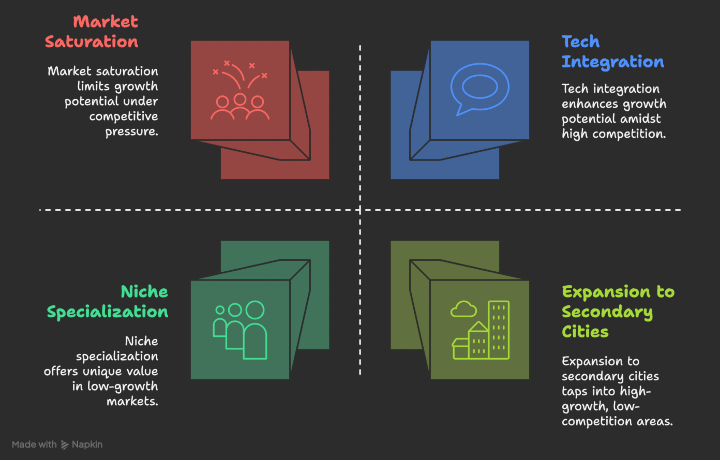
In Rwanda, Kigali has established itself as a hub for innovation and entrepreneurship, with co-working spaces playing a pivotal role in this transformation. Beyond Kigali, secondary cities such as Huye, Musanze, and Rubavu present opportunities for the expansion of co-working spaces, catering to local entrepreneurs, NGOs, and remote workers seeking collaborative and cost-effective work environments.
Integration of Tech & Smart Workspaces
As technology continues to evolve, co-working spaces in Kigali are expected to integrate more digital tools and services to enhance collaboration and productivity. This includes digital booking systems, remote access capabilities, hybrid work tools, enhanced security measures, AI-powered scheduling, and virtual networking features.
For instance, Norrsken House Kigali offers state-of-the-art meeting, conference, and workshop rooms, Skype booths, quiet areas, and event spaces equipped with high-tech solutions . Such integrations not only improve the user experience but also position co-working spaces as forward-thinking environments that cater to the dynamic needs of modern professionals.
Challenges and Competitive Pressures
Despite the growth and potential of co-working spaces in Kigali, several challenges and competitive pressures need to be addressed:
** Market Saturation: As more co-working spaces emerge, there is a risk of oversaturation, leading to increased competition and potential underutilization of spaces.
** Need for Differentiation: To stand out in a crowded market, co-working spaces must offer unique value propositions. This could involve catering to specific niches, such as creatives, women-led businesses, or NGOs, and providing tailored services that meet their unique needs.
** Sustainability of Pricing Models: Maintaining competitive pricing while ensuring profitability is a delicate balance. Operators must carefully manage operational costs and explore diversified revenue streams to sustain their business models.
Addressing these challenges requires strategic planning, continuous innovation, and a deep understanding of the evolving needs of the target clientele.
Kigali's co-working spaces have redefined the city's commercial real estate landscape, offering flexible, cost-effective, and community-driven environments that cater to the evolving needs of modern professionals. These spaces have become hubs of innovation, collaboration, and entrepreneurship, reflecting a shift from traditional office models to more dynamic and adaptable workspaces.
By embracing the principles of flexibility, shared resources, and community engagement, co-working spaces in Kigali are not just a trend but a transformative force in the city's economic development. They provide opportunities for startups, freelancers, and established businesses to thrive in a supportive ecosystem that fosters growth and innovation.
In this new era of work and real estate, adaptability and innovation are key. Embracing the co-working model is not just an option - it's a strategic move toward sustainable growth and success in Kigali's vibrant economic landscape.