Bugesera Airport: What It Means for Land and Property Values in 2026

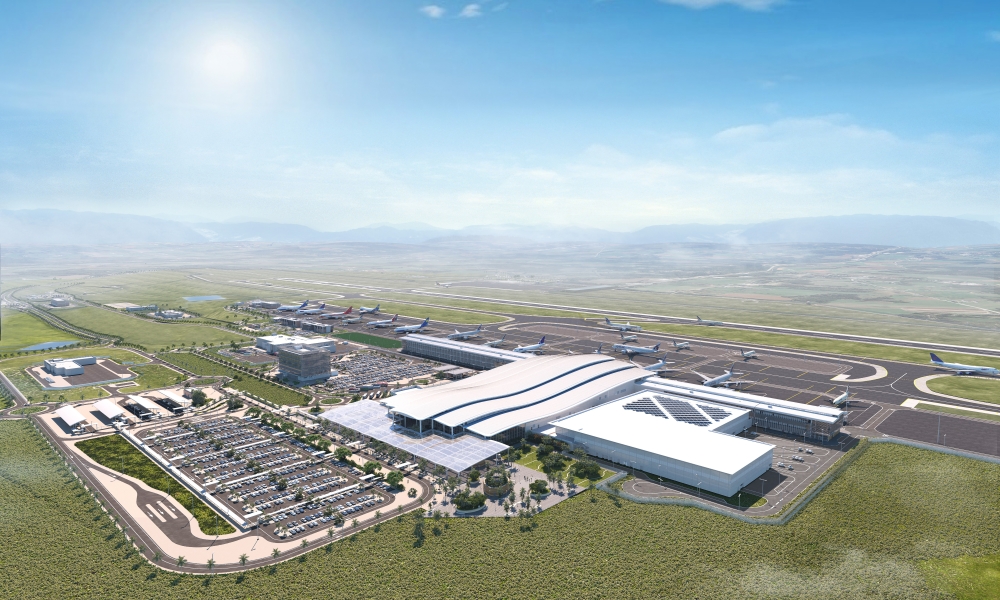
Bugesera International Airport: What It Means for Land and Property Values in Rwanda in 2026
On February 12, 2026, Rwanda's Minister of Finance and Economic Planning announced that the government had secured dramatically improved financing terms for Bugesera International Airport transforming nearly $400 million in high-interest commercial borrowing into concessional funding backed by a 95% World Bank guarantee. Construction is progressing steadily toward a 2027 scheduled completion. The runway is largely complete. Qatar Airways holds a 60% stake in the airport and will use it as a strategic hub in East Africa.
For the Kigali property market, this is one of the most significant infrastructure announcements in years. Airports do not just move passengers they move land values, rental demand, and the entire economic character of the corridor they serve. The land around Bugesera International Airport that was priced for farming five years ago is being repriced today for logistics, warehousing, commercial development, and residential demand from an entirely new workforce that does not yet exist but is coming.
This article reports the facts, explains the market implications, and gives buyers and investors an honest picture of what the airport means for property in the Bugesera corridor and what to watch for. For an independent valuation of any specific property in this area, request a professional valuation from Kwanda Real Estate.
Sources: Ministry of Finance and Economic Planning Rwanda (February 12, 2026), World Bank Rwanda, CAPA Centre for Aviation, The New Times. All market analysis is indicative — verify current pricing and terms with a licensed agent before any decision.
1. What is Bugesera International Airport? The Full Picture
Bugesera International Airport is Rwanda's second international airport, currently under construction in Rilima, Bugesera District, approximately 25 kilometres southeast of Kigali city centre. The $2 billion project has been under development since 2017 and will be, when complete, one of the most significant aviation infrastructure investments in East Africa.
The airport is built in partnership with Qatar Airways, which holds a 60% stake in the facility. Phase one will deliver a runway of 4,200 metres, a passenger terminal with capacity for 7 million passengers per year, and a cargo terminal. Phase two, expected to be completed by 2032, will expand capacity to 14 million passengers annually. For context, Kigali International Airport at Kanombe currently handles approximately 2 million passengers per year meaning Bugesera International Airport is being built to serve more than three times that volume in its first phase alone.
The Rwanda Development Board has consistently highlighted aviation infrastructure as a strategic enabler of Rwanda's ambition to become East Africa's leading business, logistics, and tourism hub. The airport is central to that strategy. It is designed not just to replace Kigali International Airport but to serve a fundamentally larger market one that Rwanda's Vision 2050 targets by positioning the country as the Singapore of Africa for investment, trade, and regional connectivity.
For property buyers and investors, the relevant fact is this: Bugesera District is transforming. The land use, the road infrastructure, the commercial activity, and ultimately the residential demand in this corridor are all being shaped by the airport. That transformation is not a distant future event it is already under way and accelerating. For broader context on how major infrastructure drives property appreciation in Rwanda, see our analysis of how tech parks and SEZs are changing Kigali real estate.
2. The February 2026 Financing Breakthrough Why It Matters
The February 2026 announcement by Minister of Finance Yusuf Murangwa is the most important update on Bugesera International Airport in years not because construction suddenly started, but because the financial risk of the project was fundamentally restructured. What had been nearly $400 million in high-interest commercial borrowing has been converted into concessional funding with a 95% World Bank guarantee, offering significantly lower interest rates and flexible drawdown schedules aligned with actual construction progress.
The World Bank guarantee is the critical signal here. When the World Bank backs a project at that level, it is making a formal institutional statement about the project's viability, governance standards, and likelihood of completion. For private investors and property buyers in the Bugesera corridor, that guarantee removes a major layer of completion risk from their analysis. The airport was always expected to be built but the February 2026 financing restructuring makes it significantly more certain and more financially sustainable for Rwanda to complete on schedule.
This matters for property buyers because completion risk is one of the primary reasons investors historically waited before positioning in airport corridors. The standard pattern globally is: announcement → early buyers position → financing secured → late buyers enter at higher prices → construction progresses → prices reflect completion → opening delivers the final uplift. The February 2026 financing news moves Bugesera International Airport firmly from the announcement phase into the confirmed delivery phase. That transition historically triggers a repricing across the surrounding corridor. For our analysis of how this pattern has played out in Kigali’s property market over the past decade, see our 10-year capital appreciation analysis for Kigali 2015–2026.
3. What an Airport Does to Surrounding Land Values
The relationship between airports and surrounding land values is well documented globally and in Africa specifically. When a major international airport opens in a district, it creates several simultaneous demand drivers that typically lift land and property values in the surrounding area over a 5 to 15-year period.
Immediate effects logistics and commercial demand
The first wave of demand around any new airport is commercial and industrial. Cargo handling companies, freight forwarders, logistics operators, warehousing businesses, fuel storage, maintenance and repair operations, hotels for transit passengers, and airport-related retail all require land and buildings within 10 to 20 kilometres of the terminal. This demand is not speculative — it is contractually driven. Airlines and logistics operators need to be physically close to the airports they serve. That creates immediate, structured demand for commercial and light industrial land in the corridor.
According to the National Institute of Statistics of Rwanda, Bugesera District is already seeing land price appreciation as investors position ahead of opening. Land previously valued primarily for agricultural use is increasingly being assessed for commercial, residential, and industrial development potential. The government has implemented zoning regulations around the airport site to manage development and direct growth to appropriate areas — which means buyers must verify zoning before purchasing any specific plot.
Medium-term effects workforce housing demand
An airport of this scale will create thousands of direct and indirect jobs. Pilots, ground crew, customs officers, airport management staff, retail workers, hotel staff, logistics operators, and the businesses that serve all of them will need housing within reasonable commuting distance. That residential demand does not exist yet but it will arrive in scale when the airport opens, and the housing supply that meets it needs to be built before it arrives. Buyers who understand this dynamic can position in the residential land market while demand is still in the anticipation phase rather than the fulfilment phase.
4. Which Types of Property Benefit Most
Agricultural and undeveloped land in the Bugesera corridor currently represents the most accessible entry point for buyers who want exposure to the airport’s long-term impact. Land that was priced for farming is being repriced as development potential becomes clearer. The key criteria are: proximity to the main Kigali–Bugesera road, zoning designation, plot size, and title status. Large flat plots with clean titles on or near the main access road have the highest potential for commercial and residential conversion over the next 5 to 10 years.
Lakeside and scenic land in Bugesera District particularly around Lake Cyohoha and the district's other natural water features represents a distinct secondary opportunity. As Bugesera grows into an airport corridor, it will also attract tourism, hospitality, and lifestyle development. Rwanda's clean environment, lakes, and scenic landscapes are already drawing eco-tourism investment. A lakeside plot today may have value both as an immediate lifestyle asset and as a future hospitality development site.
Residential land near the access corridor is the third category. As the airport workforce grows and Bugesera District develops, demand for quality residential land within 15 to 30 minutes of the airport will increase. Buyers who position in residential zones now — before the workforce arrives are following the same playbook that produced strong returns in Rusororo and Kinyinya in earlier cycles.
For buyers who want to evaluate specific land in the Bugesera corridor today, current Kwanda Real Estate listings include a range of asset types across the district:
• Huge and beautiful farm land for sale in Bugesera, Eastern Province:large agricultural land with significant development potential as the airport corridor matures.
• Agricultural plot for sale in Bugesera: a well-located plot currently under agricultural use, suited to buyers with a medium to long-term development horizon.
• Spacious Lake Cyohoha plot for sale: a rare lakeside opportunity in Bugesera combining natural setting with the district's growing infrastructure story.
All listings are indicative only. Verify current availability, pricing, zoning, and title status with Kwanda Real Estate or a licensed agent before any decision.
5. What Buyers Should Know Before Entering This Corridor
Buying land in an airport corridor requires a more careful due diligence process than buying in an established residential neighbourhood. The opportunity is real — but so are the specific risks that come with development-stage land in a rapidly changing zone. Here is what every serious buyer must check.
Zoning is the most critical check
The government of Rwanda has implemented land use planning and zoning regulations around Bugesera International Airport specifically to manage development and direct growth to appropriate areas. This means not every plot near the airport is zoned for the use a buyer might intend. A plot zoned for residential use cannot automatically be developed for commercial logistics. A plot designated for agricultural preservation may have restrictions on conversion. Verify the specific zoning designation for any plot on the RLMUA portal using the plot’s Unique Parcel Identifier (UPI) before any financial commitment.
Verify the access road situation
The government has invested in road infrastructure along the Kigali–Bugesera corridor, but access quality within the district varies significantly between plots. A plot on the main tarmac road has fundamentally different development economics from a plot 3 kilometres down an unpaved track. Verify the current road access status on the ground not just on a map before assessing a plot’s commercial potential.
For a broader framework for evaluating any growth corridor plot in Rwanda, our guide on conditional zoning in Kigali and how land use affects property value covers the complete due diligence checklist. The same principles apply to Bugesera.
6. Honest Risks Every Investor Must Consider
Timeline risk. Bugesera International Airport has been under construction since 2017. The 2027 completion target is supported by the World Bank financing restructuring, but large infrastructure projects globally and in Africa frequently experience schedule extensions. Buyers who need a property to appreciate within a fixed 2–3 year window should factor in the possibility that full airport operations may be delayed. Land banking in this corridor is best suited to buyers with a 5–10 year horizon.
Zoning reclassification risk. As the airport zone matures, the government may update zoning designations around it. A plot currently zoned for residential use near the airport could be reclassified for industrial or commercial use in a future Master Plan update, or vice versa. This can create value or reduce it depending on the specific outcome. Monitor RLMUA and City of Kigali planning updates regularly if you hold land in this corridor.
Speculative pricing risk. The airport story is well known in Rwanda’s property market. Some sellers in the Bugesera corridor are pricing land at levels that already reflect anticipated future demand rather than current fundamentals. Not every plot near Bugesera International Airport is undervalued some may already be overpriced relative to what the market can realistically deliver in the near term. An independent valuation grounded in current comparable transactions is essential before agreeing on any purchase price. According to the African Development Bank, infrastructure-led land speculation is one of the most common causes of poor property investment outcomes in fast-developing African corridors.
Title risk. Bugesera District includes areas where land tenure history is complex and title disputes exist. Always verify the UPI on the Rwanda Land Management and Use Authority portal and confirm clean title before paying any deposit. Our guide on how to avoid property scams in Rwanda covers the specific verification steps that apply to every transaction in Rwanda.
KEY TAKEAWAYS
• Bugesera International Airport is Rwanda's second international airport, 25km southeast of Kigali. Phase 1 targets 7 million passengers per year. Qatar Airways holds a 60% stake. 2027 completion target.
• In February 2026, Rwanda secured World Bank-backed concessional financing — converting nearly $400 million in high-interest debt into lower-cost funding. This is the strongest signal yet that the airport will be completed on schedule.
• Airport corridors globally generate three waves of property demand: immediate commercial and logistics, medium-term workforce housing, and long-term lifestyle and hospitality development.
• Agricultural land, lakeside plots, and residential land near the main access road are the three primary asset types available in the Bugesera corridor today.
• Zoning is the most critical check before any Bugesera purchase. Not every plot near the airport is zoned for commercial or development use. Verify the UPI on the RLMUA portal before any financial commitment.
• Timeline risk, speculative pricing, and title complexity are the three main risks specific to this corridor. All are manageable with proper due diligence.
• Buyers with a 5–10 year horizon are best positioned to capture the appreciation cycle this airport will generate. Short-term investors should be cautious.
• All figures, timelines, and market analysis in this article are indicative. Verify current pricing, zoning, and availability with a licensed agent before any decision.
Conclusion
Bugesera International Airport is not a rumour or a distant plan. It is a $2 billion infrastructure project with Qatar Airways as a partner, World Bank financing secured, and a 2027 completion target. The land around it is already being repriced. The zoning framework is already being applied. And the buyers who will look back in 2030 and wish they had moved earlier are making their decisions right now.
The question is not whether the airport will change property values in Bugesera District it already is. The question is whether a specific plot, at a specific price, with a specific title and zoning designation, represents genuine value at this stage of the development cycle. That requires individual due diligence, not just enthusiasm about the corridor.
Beyond the news and the analysis, what matters is what you do with the information. For buyers evaluating this area, Kwanda Real Estate can provide independent market guidance and valuation support. Browse land for sale across Bugesera and Rwanda, request a professional property valuation, or contact Kwanda Real Estate for analysis of the Bugesera International Airport corridor before making any move.
Frequently Asked Questions
Q1: What is Bugesera International Airport?
Bugesera International Airport is Rwanda's second international airport under construction in Bugesera District, approximately 25 kilometres southeast of Kigali. The $2 billion project broke ground in 2017. Phase 1 will handle 7 million passengers annually. Qatar Airways holds a 60% stake. The airport is scheduled for completion in 2027. Rwanda secured World Bank-backed concessional financing in February 2026 to replace high-interest commercial debt, significantly improving the project's financial sustainability.
Q2: How does Bugesera Airport affect land prices in Bugesera District?
Land near the airport corridor is being repriced from agricultural values toward commercial, residential, and industrial development values. This process began before construction started and accelerates as completion nears. Plots on or near the main Kigali–Bugesera road have seen the strongest interest. However, pricing varies significantly by location, zoning, and access. Not every plot in Bugesera has equal development potential individual due diligence is essential before assessing any specific plot's investment case.
Q3: Is now a good time to buy land near Bugesera Airport?
The February 2026 World Bank financing confirmation moves Bugesera Airport from the announcement phase into the confirmed delivery phase which historically triggers corridor repricing. Buyers with a 5–10 year horizon who can identify well-zoned, cleanly titled plots at realistic prices are in a favourable position. Buyers who need short-term returns should be cautious timeline risk is real and some land in the corridor may already reflect speculative pricing. An independent valuation is the most important first step.
Q4: What types of property are available in Bugesera District?
The Bugesera corridor currently offers agricultural land, large farm plots, lakeside plots near Lake Cyohoha, and residential land at various distances from the airport site. Commercial and industrial land near the main road is increasingly sought after. The mix of assets available today reflects the district's current transition from predominantly agricultural use toward a more diversified development corridor. Current listings include a large farm land plot in Bugesera Eastern Province, an agricultural plot for sale in Bugesera, and a spacious lakeside plot at Lake Cyohoha.
Q5: What should I check before buying land near Bugesera Airport?
Five checks apply to every Bugesera purchase: verify zoning designation on the RLMUA portal; confirm the plot has a clean title with no encumbrances; verify current road access on the ground not just on a map; confirm whether your intended use is permitted or conditional under the current zoning; and get an independent valuation before negotiating price. The government has implemented specific zoning regulations around the airport site to direct development not every plot can be used for every purpose.
Q6: When will Bugesera Airport open?
The current scheduled completion is 2027, following the February 2026 financing restructuring that replaced high-interest commercial debt with World Bank-backed concessional funding. The runway is largely complete. Phase 2, expanding capacity to 14 million passengers per year, is expected by 2032. Construction timelines for large infrastructure projects can shift verify current status through official Rwanda Civil Aviation Authority communications and credible news sources before making any time-sensitive investment decision.
Q7: How does Bugesera Airport compare to Kigali International Airport?
Kigali International Airport at Kanombe currently handles approximately 2 million passengers per year. Bugesera International Airport Phase 1 is designed to handle 7 million passengers more than three times the current capacity. This scale difference means Bugesera is not replacing Kigali Airport but transforming Rwanda's entire aviation capacity. The economic impact on surrounding property values is correspondingly larger than anything a same-size airport expansion would create.
ABOUT KWANDA REAL ESTATE
Rwanda's leading licensed property agency. KG 5 Ave, Ikirezi Building, Kacyiru, Kigali. 1% buyer · 5% seller · Zero upfront fees. kwandarealestate.com | +250 788 370 360 | [email protected]
⚠️ Educational Note: Purely educational — not financial or legal advice. All figures are indicative 2026 estimates. Actual values vary by location, condition, and market conditions. Always consult qualified professionals before any property decision.